SEO agency directories: which are worth listing on
How to tell a directory that sends real enquiries from one that only wants your money, and how to make a listing convert.

· 3 min read
Every agency gets emails from directories promising leads. Some are worth an afternoon; many are not worth the form you would fill in. Here is how to tell the difference.
What a directory can and cannot do for you
A good directory does two things: it puts your business in front of people who are actively looking for a provider, and it gives those people a reason to trust you (reviews, examples, clear information).
What it usually will not do is improve your rankings through its link. Most directories mark outbound links as nofollow or sponsored, and links created only to manipulate rankings are against search engines' spam policies. If a directory sells its main benefit as "a backlink", that is a warning sign, not a feature.
Five questions to ask before you list
- Do buyers actually use it? Search for the kind of query your clients would use, such as "SEO agency for e-commerce" or "SEO consultant in your city". Does the directory show up? Do its listing pages look visited and maintained?
- Are reviews verified? Platforms that confirm reviews with the client are more credible to buyers than ones where anyone can post anything.
- Is there an editorial bar? If the directory accepts anything, your listing sits next to spam. Some form of review keeps the neighbourhood respectable.
- What is the business model? Free listing, paid placement, pay per lead or subscription can all be fine, but you should know what you are paying for and whether you can stop.
- Does the category fit? A general business directory is weaker than one focused on your service or your clients' industry.
The types worth considering
Google Business Profile. If you serve a local area, this matters more than any directory: it is how you appear in local search and on Maps.
B2B review platforms. Platforms where buyers compare agencies by verified client reviews can bring well-qualified enquiries. They work best once you have clients willing to leave a review.
Partner directories. If you specialise in a platform such as an e-commerce system or a CRM, its partner directory is where that platform's customers look for help.
Industry communities. Networks focused on SEO and marketing put you in front of peers who refer work, and of businesses looking specifically for SEO help. SEOgenz is one of these.
Local and professional associations. Chambers of commerce and local business groups often have member directories that are small but well trusted.
Red flags
- Guaranteed rankings or "guaranteed leads".
- Selling "dofollow links" or "authority" as the main benefit.
- Pay to remove negative reviews.
- Pages full of near-identical listings that nobody seems to maintain.
- Contracts that are hard to cancel.
How to make a listing convert
Most listings fail because they say nothing specific. A good one answers, quickly:
- What exactly do you do, and for whom? "Technical SEO for online stores on Shopify", not "full-service digital solutions".
- Why should I believe you? A short result, a client type, years of experience, a review.
- What happens next? A clear contact route and what the first conversation looks like.
Keep it current: outdated services, broken links and old team photos all cost enquiries.
Listing on SEOgenz
SEOgenz has a directory of SEO agencies, consultants and marketing businesses. Listing is free; every listing is reviewed by a moderator before it appears; and links are marked as user-generated, because the point is to be found by people, not to trade links.
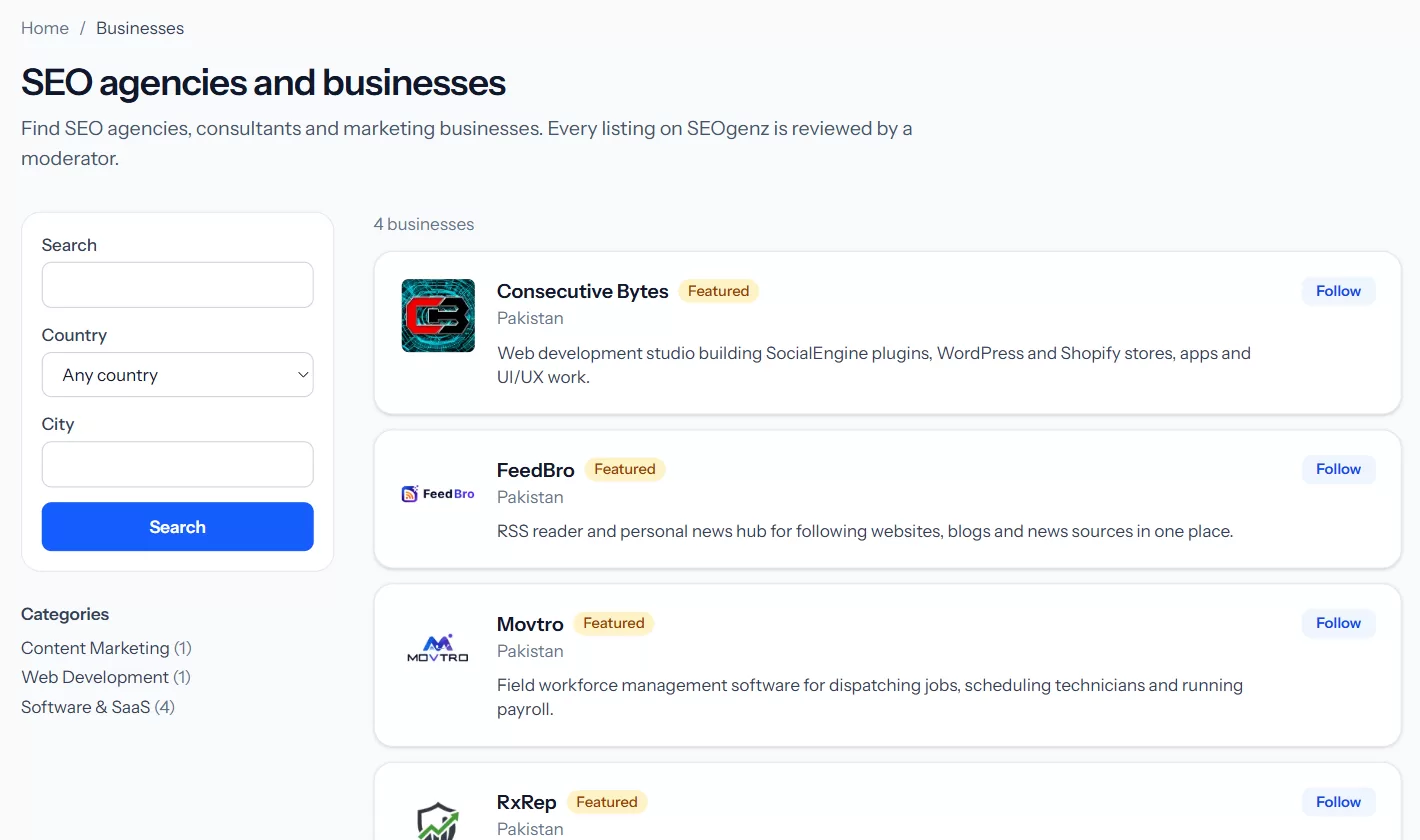 The business directory: search by name, country and city, or browse by category.
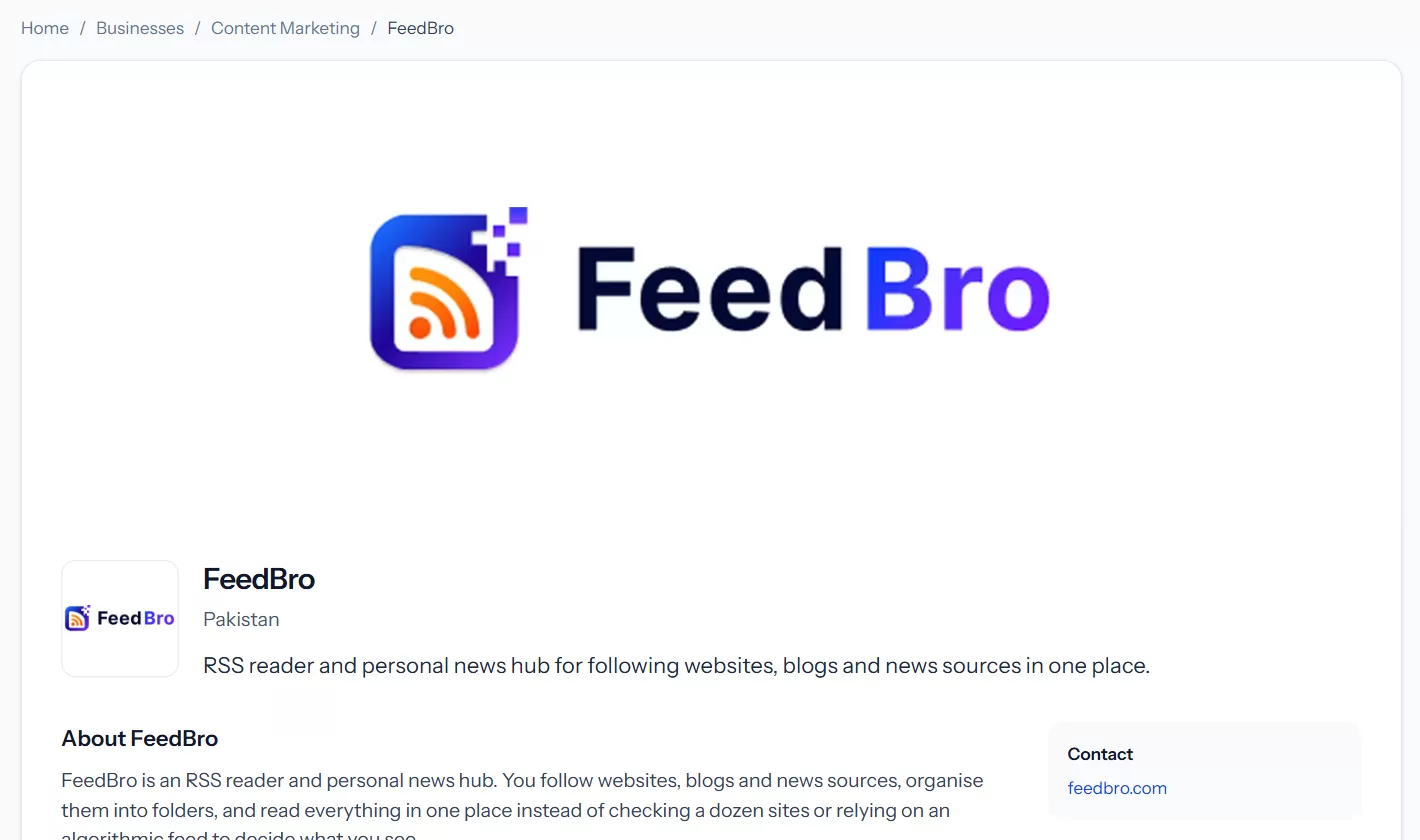 A listing page: what the business does, where it is, and how to contact it.
Which directory has actually sent you a client? Tell us in the comments.