Where SEO professionals can publish articles for free
Your own site, LinkedIn, publishing platforms, communities and guest contributions: what each is good for and how to republish without duplicate-content trouble.

· 3 min read
Writing about your work is one of the best ways to get noticed as an SEO, but where you publish changes who reads it, who owns it and how long it keeps working. Here are the main options and what each is good for.
1. Your own website
Start here when you can. You own it, it is not subject to another platform's rules, and articles keep bringing visitors for years if they answer real questions.
The downside is that a new site has no audience. That is why most people combine their own site with the options below, and use them to bring readers back to it.
2. LinkedIn
LinkedIn posts and articles reach the people already connected to you, which for most SEOs means colleagues, clients and potential clients. Short, practical posts tend to travel further than long articles, and comments carry as much weight as the post itself.
It is excellent for visibility, weaker for long-term search traffic, and you do not own the audience.
3. Open publishing platforms
General publishing platforms let anyone write and offer some built-in discovery. Some let you import or republish an article with a canonical link pointing back to the original on your own site, which tells search engines which version is the original.
They work well for reaching readers outside your network, but discovery depends on the platform's algorithms, which change.
4. Industry communities
Communities built around SEO and marketing put your writing in front of people who care about the topic, and, importantly, give you a conversation in the comments. A good article in the right community can lead to partnerships, referrals and job offers.
Look for communities with an editorial bar (so your work does not sit next to spam) and active discussion.
SEOgenz is one of these: members can publish articles, which are reviewed by moderators before they go live, and discuss them with other SEO professionals. Links in member articles are marked as user-generated content by default.
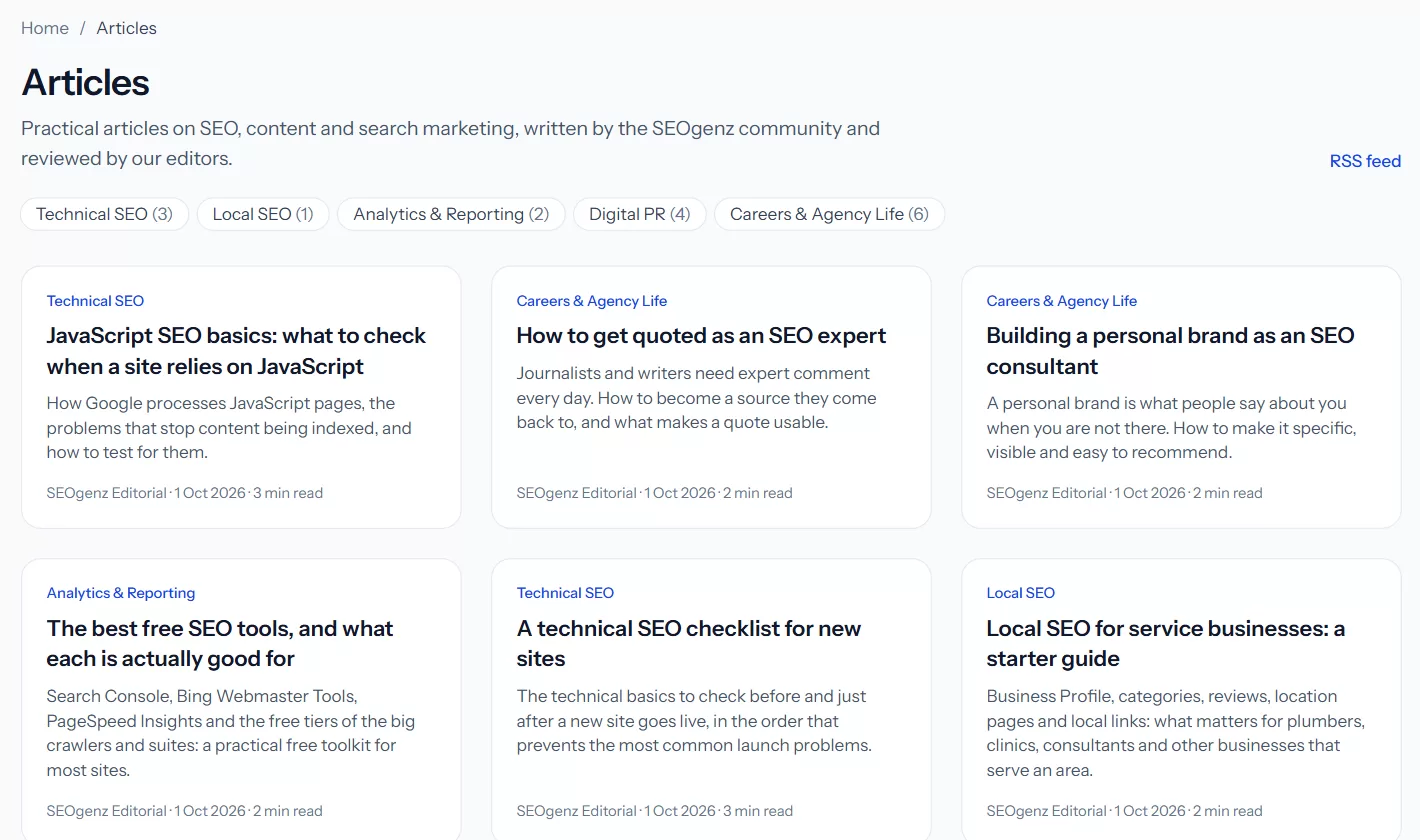 Articles on SEOgenz, grouped by category; each one is reviewed before it is published.
5. Guest contributions to industry publications
Writing for established publications reaches a large audience and carries credibility. Expect editorial standards, edits to your draft, and links that are usually nofollow or sponsored. Pitch an idea that fits the publication's readers, not a generic article with a link in it: editors receive plenty of those.
6. Q&A and discussion communities
Answering questions in depth is a form of publishing. Long, genuinely useful answers get read for years. Link to your own work only when it truly answers the question; communities notice self-promotion quickly.
Republishing without trouble
You can publish the same article in more than one place, but:
- Publish on your own site first, then republish elsewhere a little later.
- Use a canonical link pointing to the original wherever the platform allows it.
- Adapt rather than copy when you can: a shorter version for LinkedIn with a link to the full piece often works better than the same text everywhere.
How to choose
Ask three questions about any place you might publish:
- Are the readers the people I want to reach?
- Will this still be findable in two years?
- Does it lead people back to something I own, such as my site, my profile or my newsletter?
The best mix for most SEO professionals is: your own site for depth, LinkedIn for reach, and one or two communities for conversation.
Where has your writing reached the most useful readers? Tell us in the comments.